
“At a time when the visual landscape encompasses a multitude of disunited approaches and styles — many of which trade on indulgent self-expression, nostalgia, and slick, complicated commercialism — the steadfast rigour of these two pioneering modernists holds renewed value for consideration. The bold confidence of their work cuts through the clutter of ego and distracting professional concerns: It reminds us of the power of simplicity; of the narrative richness of geometry and abstract metaphor; and ultimately, of the joy of discovery.”





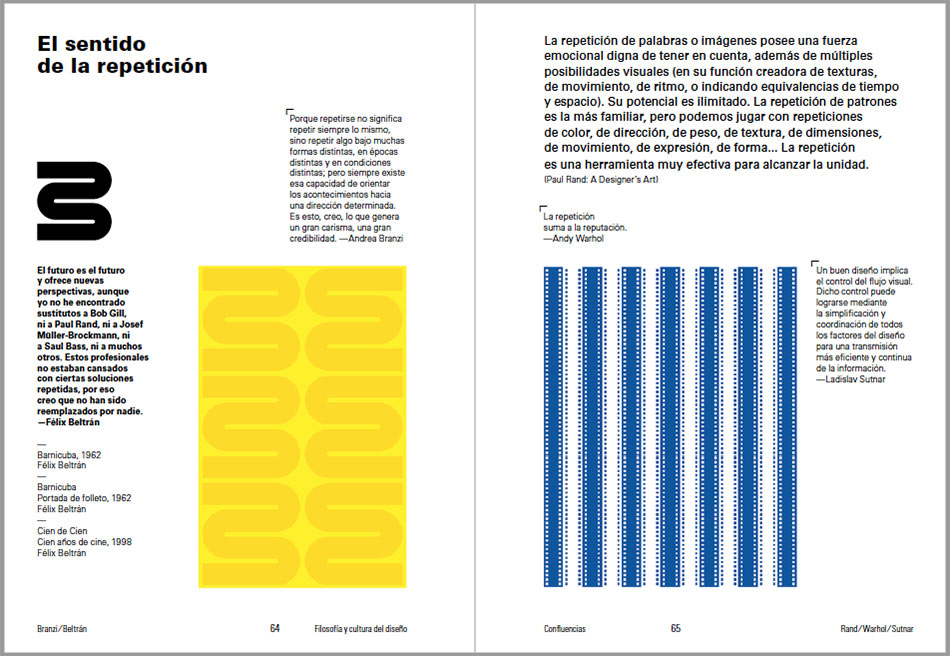
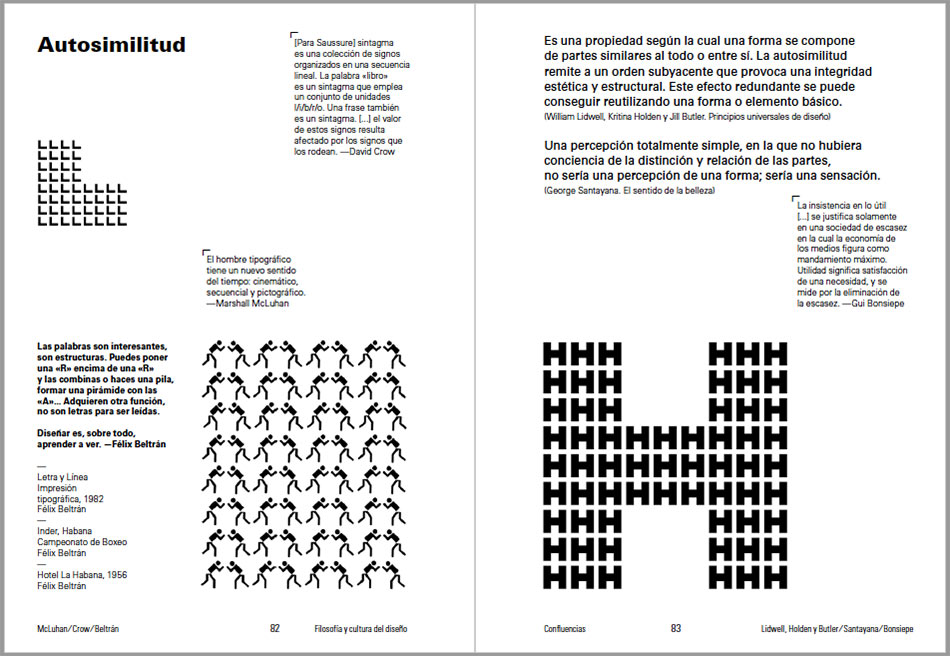

For more info about Confluencias get in touch with the editors Sonia Diaz and Gabriel Martinez of LSDSpace. Some high-res spreads are up in the Cruz mas Cruz Behance portfolio.
Posted . Updated .
More on how marks like this are made in Logo Design Love, third edition.




Ian Paget,
This looks beautiful. A shame it’s in Spanish, but regardless it looks like a proper piece of benchmark inspiration – thanks for discovering and sharing it. I’ll certainly need to track down a copy once it’s released.
David Airey,
The editors are talking to a university about an English version, but it’s moving slowly.
Simon Charwey,
I’m in love with the simplicity and yet boldness presence each of these marks are speaking to me. Each time I see marks like these, it reminds me of the West African Adinkra symbols and their prototypical elements that resonates with both natives (or Africans living outside Africa) and non-natives.
David, thanks for sharing this post.
Alexander Parada,
Thank you very much for this article, David! I’m Cuban and living in Vancouver, Canada, and struggling to grow up as an aspiring graphic designer. Just to see two Cubans have been at this level is so inspiring for all of us and makes me want to move forward with more determination and strength. It’s really hard to get in the graphic design school back on our island, only if your parents know the right people, or are officers from the government, so it’s basically a few chosen people who go there and even after graduating maybe won’t work as designers. Maybe the perception of these two is influenced by the simplicity in our day by day, we didn’t have anything back then and with no connection with the world our reality becomes really simple and distorted. Anyways, I’m getting off topic, thank you very much!
David Airey,
You’re very welcome, Simon (please excuse the slight delay).
Alexander, best wishes with your path in the profession. I hope things work out better than you’re hoping for.
Steven Skaggs,
My Spanish is poor, but with the help of Google Translate it is possible to read this remarkable book. So many of my mentor/heroes are quoted: Zapf, Abraham Moles, Peirce, and a panoply of the 20th century’s greatest designers. The work is steadfastly high-modern, international style, and it makes a strong case for modernism along with the idea that design requires a deeply humanist commitment. As Moles says in one quote, the very term “design” (of the sign) entails an intervention in the human environment, and therefore “the knowledge of everyday life and people’s needs constitutes the raw material of the designer’s work.” Really hope it will appear soon in English so it can reach a broader public.